
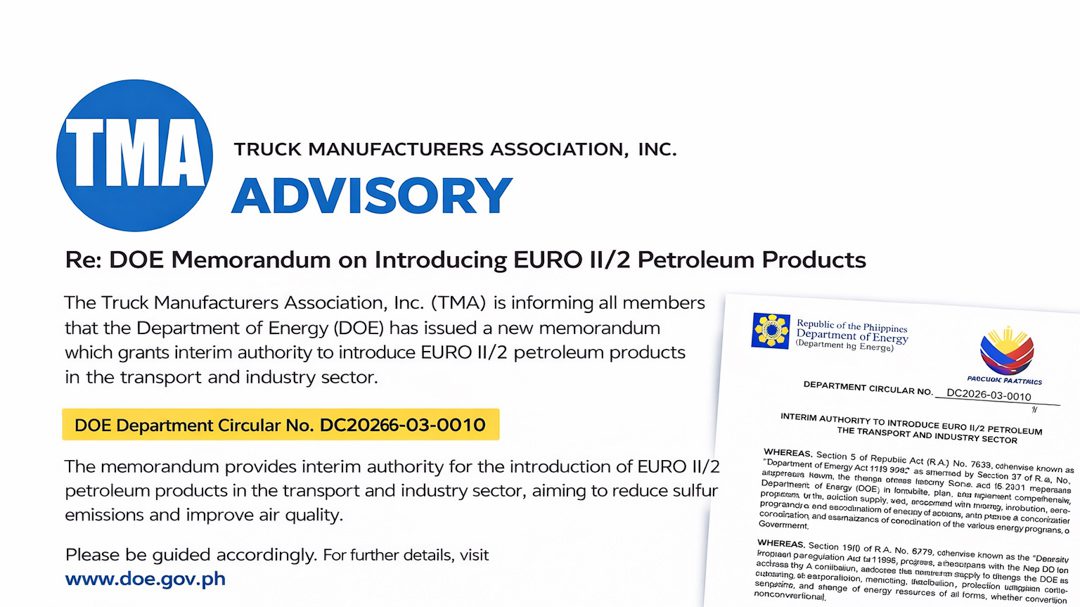
 The Department of Energy (DOE) has issued a circular allowing the temporary use of Euro II fuels in the Philippines to help address global supply challenges. The Truck Manufacturers Association (TMA) supports the government’s effort to ensure fuel availability, but we want truck owners, fleet operators, and drivers to understand what this means for their vehicles.
Why It Matters
- Modern trucks and vehicles in the Philippines are designed for Euro IV fuels. These fuels have lower sulfur content and are cleaner, which matches the advanced fuel systems and emission controls in today’s engines.
- Euro II fuels have higher sulfur levels. Using them in Euro IV‑compliant vehicles may cause problems such as reduced engine performance, faster wear and tear, and damage to emission systems.
What Truck Owners Should Do
- Check your vehicle’s compliance. If your truck is Euro IV‑compliant, be cautious about using Euro II fuel.
- Look for clear advisories at fuel stations. The DOE requires stations to post notices about which fuel is being sold. Always confirm before filling up.
- Understand the risks. Using the wrong fuel can affect your truck’s durability, maintenance costs, and emissions.
TMA’s Recommendations
- The introduction of Euro II fuel should only be temporary and closely monitored.
- Government and industry must work together to provide clear public information, so drivers know which fuel is safe for their vehicles.
- Long‑term, the Philippines should continue moving toward cleaner, more efficient, and sustainable fuel standards.
In short: Euro II fuel is being allowed as a stopgap measure, but if your truck is built for Euro IV, using Euro II could harm your engine and emissions system. Always check advisories at the pump and stay informed to protect your vehicle and livelihood.