

Before we begin this, allow me to ask you a question. Among the two or three pedals that you can control inside a vehicle, which one gives you the most emotional returns? Which one can put a smile on your face? Or leave you feeling down?
It’s the throttle pedal right? The proverbial and all important, GO pedal.
From the beginning of automotive time, the connection between throttle plate and throttle pedal has been more or less mechanical. Be it by throttle linkage or a throttle cable. With the advent of electronics and their increasing ability to control a vehicle’s functions, the once mechanical throttle inputs has become electronic throttle inputs.
Now we’re not here to debate whether it’s a good or bad thing. Electronic controls are here to stay until the next round of tech advancements make the current one obsolete. ‘Drive by light’ perhaps? Maybe, who knows?
Going back to the subject at hand. Your inputs to the throttle pedal are turned into electrical signals that go through the car’s ECM (Electronic Control Module), which in turn sends electrical signals to the ETB (Electronic Throttle Body) to do your bidding. On some instances, the throttle responses from the factory leave something to be desired. There’s nothing the car can do about it. It’s just the way the programmed it. And for of us enthusiasts, this simply won’t do.
Enter DTE Systems GmbH with their product called Pedalbox. Yup, DTE Systems is a German company and Pedalbox is a TUV certified product.
Installing the DTE Pedalbox
Pedalbox’s purpose is to improve the factory throttle response times at the throttle pedal. As a result, you get a sportier feel from the immediate engine response based on your throttle inputs and that ‘no lag’ feel of a direct connection between your foot and the throttle plate.
In this particular review, our test mule is a relatively well-maintained, bone stock 2016 Mitsubishi Mirage GLS. A popular car in it’s our right, judging by the number of similar cars out on the road. It is also a vehicle which has a lot to be desired of when it comes to the throttle response department.
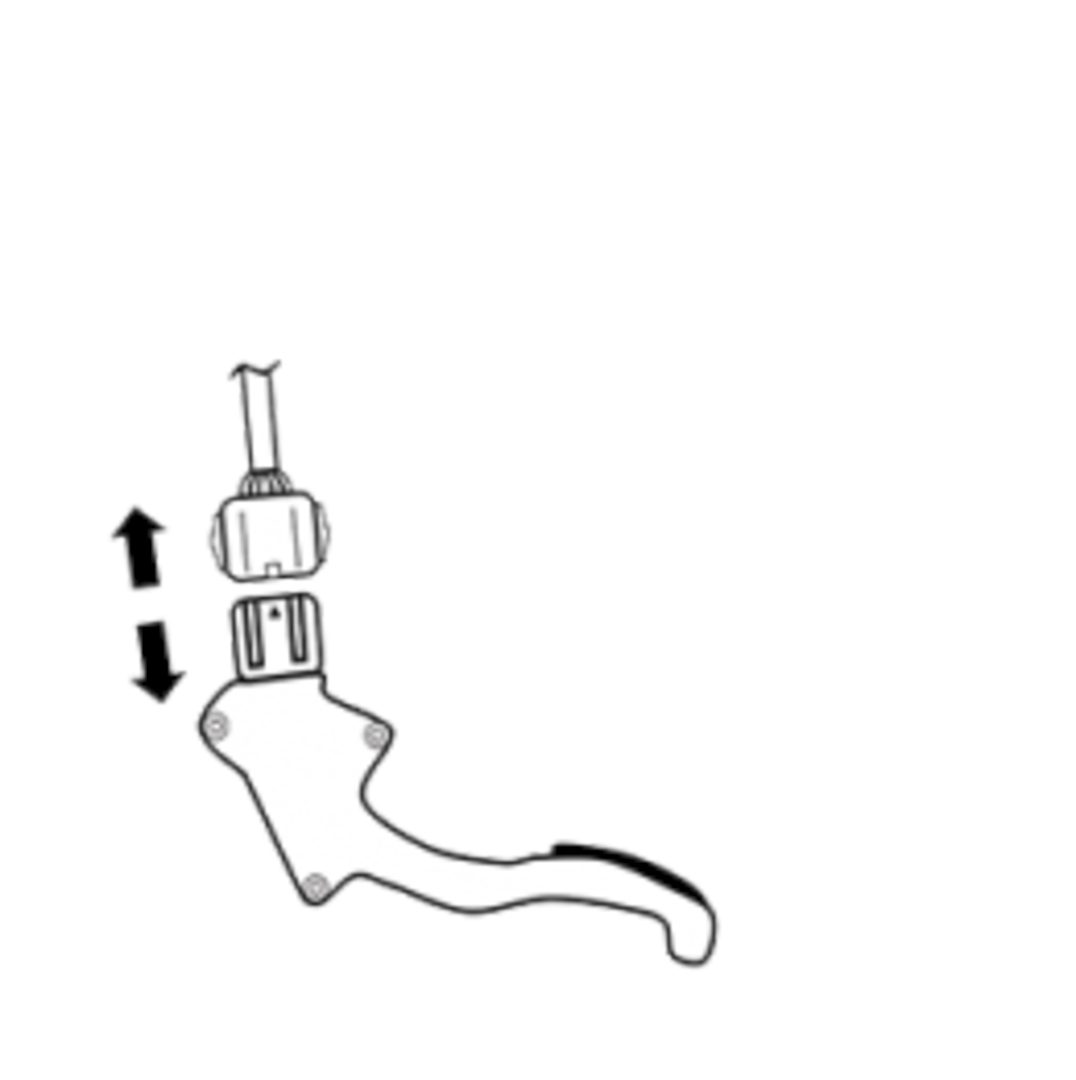
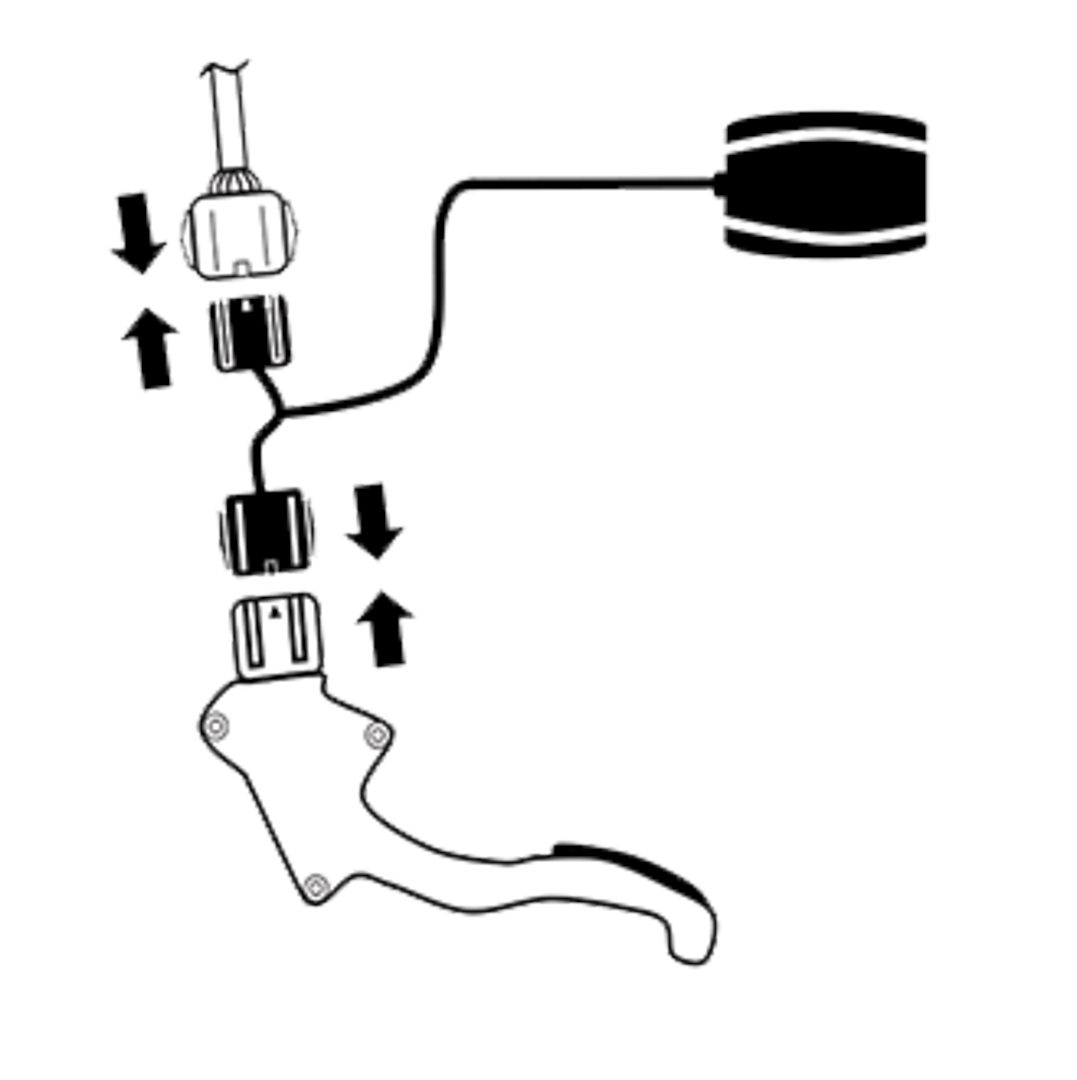

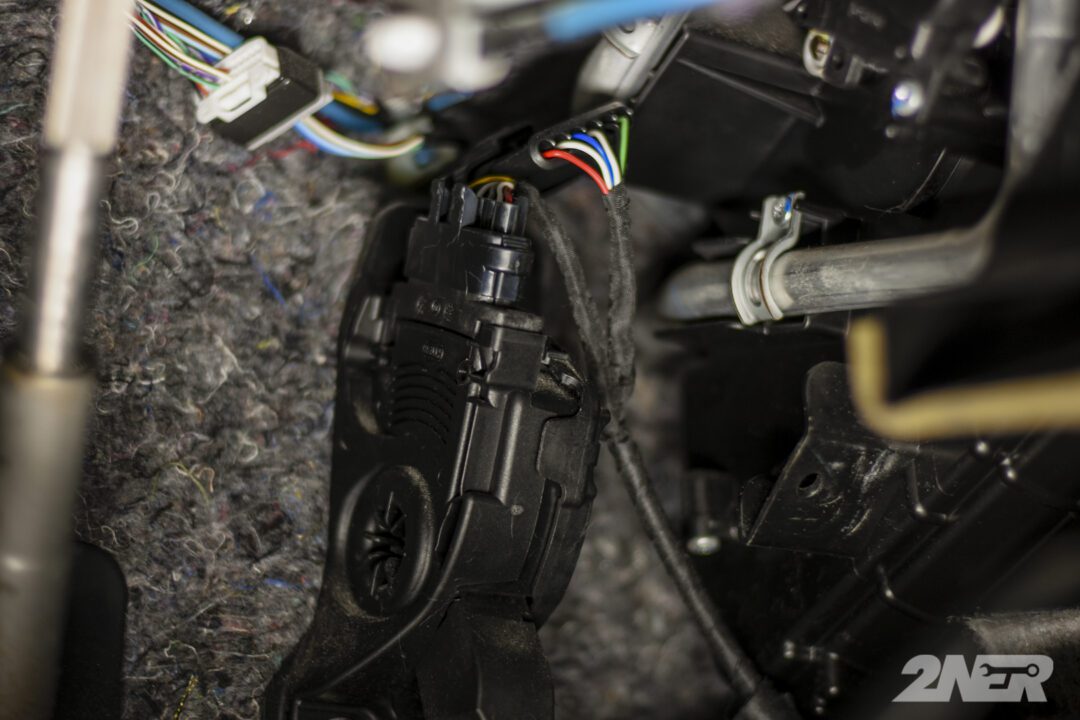
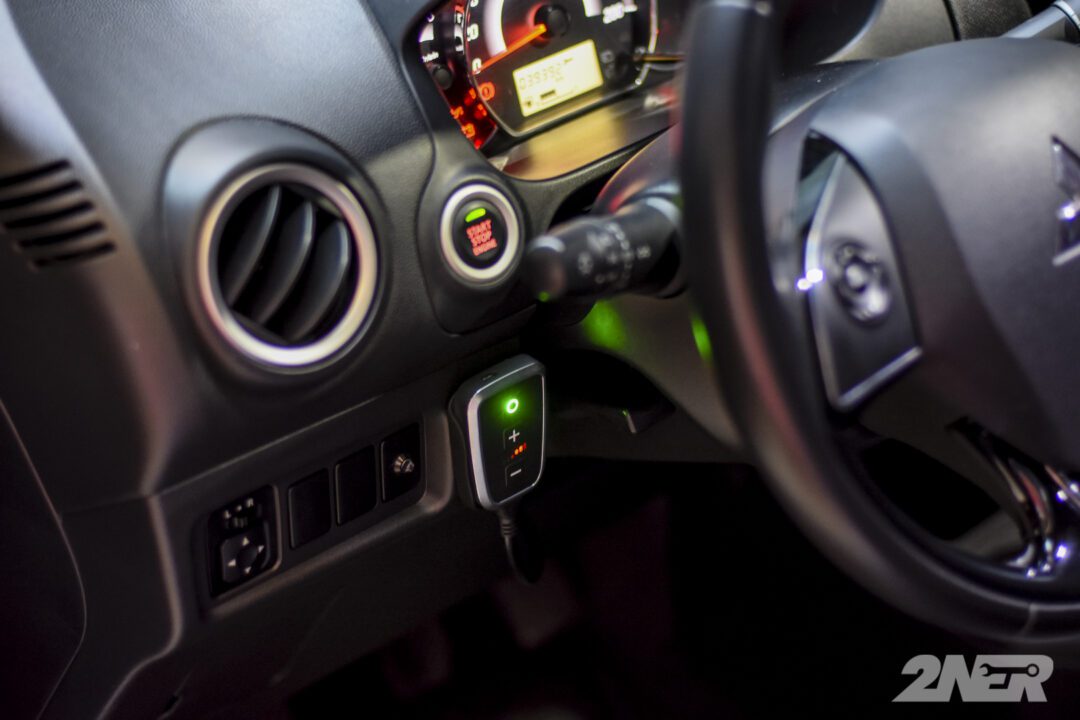
Installaltion is easy as plugging in a single wiring loom into the throttle pedal harness found under the dashboard. It’s that simple. After we found a spot for the Pedalbox control module, the install was now complete.
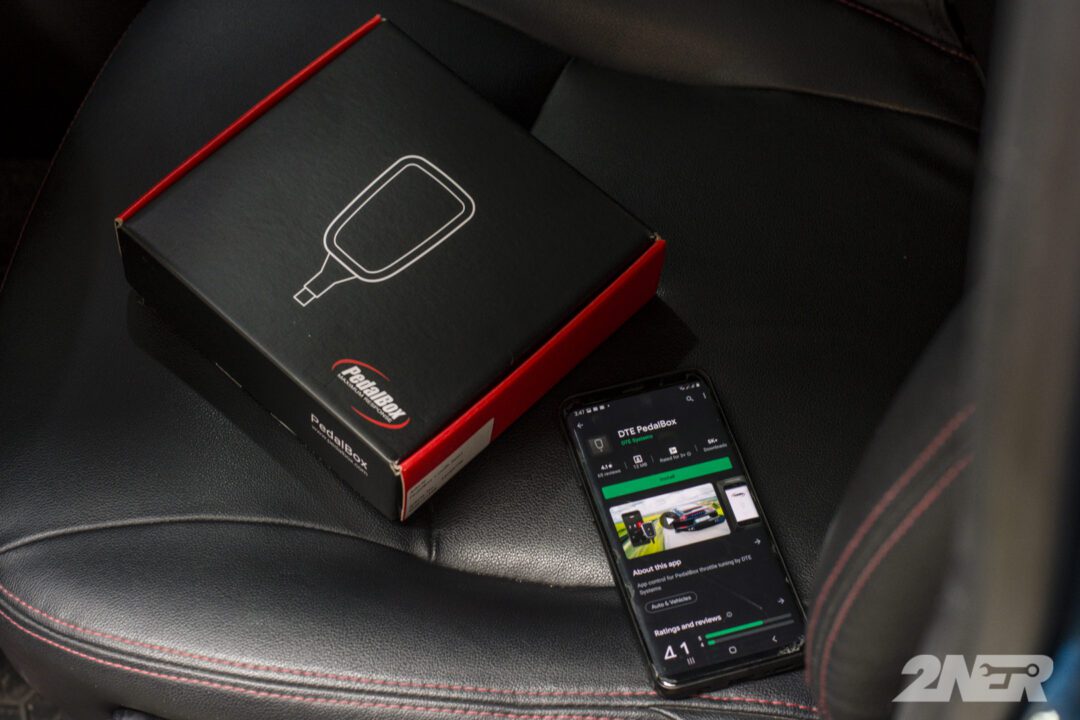
Adding to the ease of installation, DTE also added another convenience. You can also control the central functions of tuning of Pedalbox with your smartphone wirelessly by Bluetooth. Just download the Pedalbox app from Apple iTunes or Google Play, install on your smartphone, connect thru Buetooth, pair and you’re all set to control Pedalbox thru your smartphone.
Let’s see what this does
Out of the box, there are 3 modes on the Pedalbox. You can select between City, Sport, Sport+ and there is a Stock mode, which is basically a bypass mode. Each mode increases throttle response by +13%, +22% and +33% respectively. In addition to the different modes, each mode allows you to fine tune the mode in 7 increments to suit your driving style. Setting it up is so easy, you can do it yourself in the comfort of your garage or driveway.
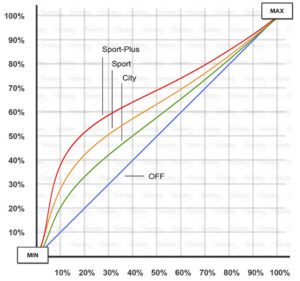
Initial impressions of the Pedalbox are promising with the lag in the stock throttle response virtually eliminated (except for Stock mode). With every mode increasing the rate of responsiveness, it’s easy to get lost in the tuning process and setting it at the most responsive setting.
After using Pedalbox for a few weeks, I have fiddled with the settings up and down the range of adjustments. It is good thing there is a Stock mode setting which allows back-to-back comparisons of your adjustments. As I have said earlier, this is not a one setting fits all deal. So finding a setting that suits you and your driving style takes some trial and error, but that journey is also loads of fun in itself and a different story for another article.
So with my settings locked in, the DTE Pedalbox performs flawlessly. And invisibly, I might add. If you were to hide the control module and just control Pedalbox via smartphone, no one would know you had it installed until they got behind the wheel and drive your vehicle. It definitely checks all the boxes in my book for what it has to offer.
Satisfaction without adding power
Since the Pedalbox is NOT a power enhancement accessory, the benefit is found elsewhere. We hear about some vehicles being an extension of your limbs. They seem to respond to your every control input, the way you input it. Making driving a fun and fulfilling experience.
On the throttle side of things, the DTE Powerbox just does that for you. It gives you back that control over the throttle pedal, like it was directly connected to your foot. With the lag all but gone, the vehicle feels agile. Responsive to every input your right foot makes. Although no power was added, the satisfying feeling of a direct connection more than compensates. While it is true that (engine) power corrupts, absolute control over that power is absolutely fun.
DTE Pedalbox is distributed locally by DTE Philippines. You can visit their Facebook page or go the international website for more information.